

While billions are poured into maintaining and extending today’s road system, reliable traffic data isn’t widely available. Traditionally, capturing traffic data requires "heavy" infrastructure which is expensive and power-hungry, necessitating external power lines. As a result, traffic monitoring instruments are mostly limited to major highways. Urban and residential areas are left as "white spots" that must rely on traffic models rather than real-time data; models which often don’t reflect today’s reality.
The Solution: StreetSense – The Fully Autonomous sensing solution
To bridge this gap, Mobility Sensing developed StreetSense: a compact, IoT-enabled sensor designed as a simple and low-cost solution.
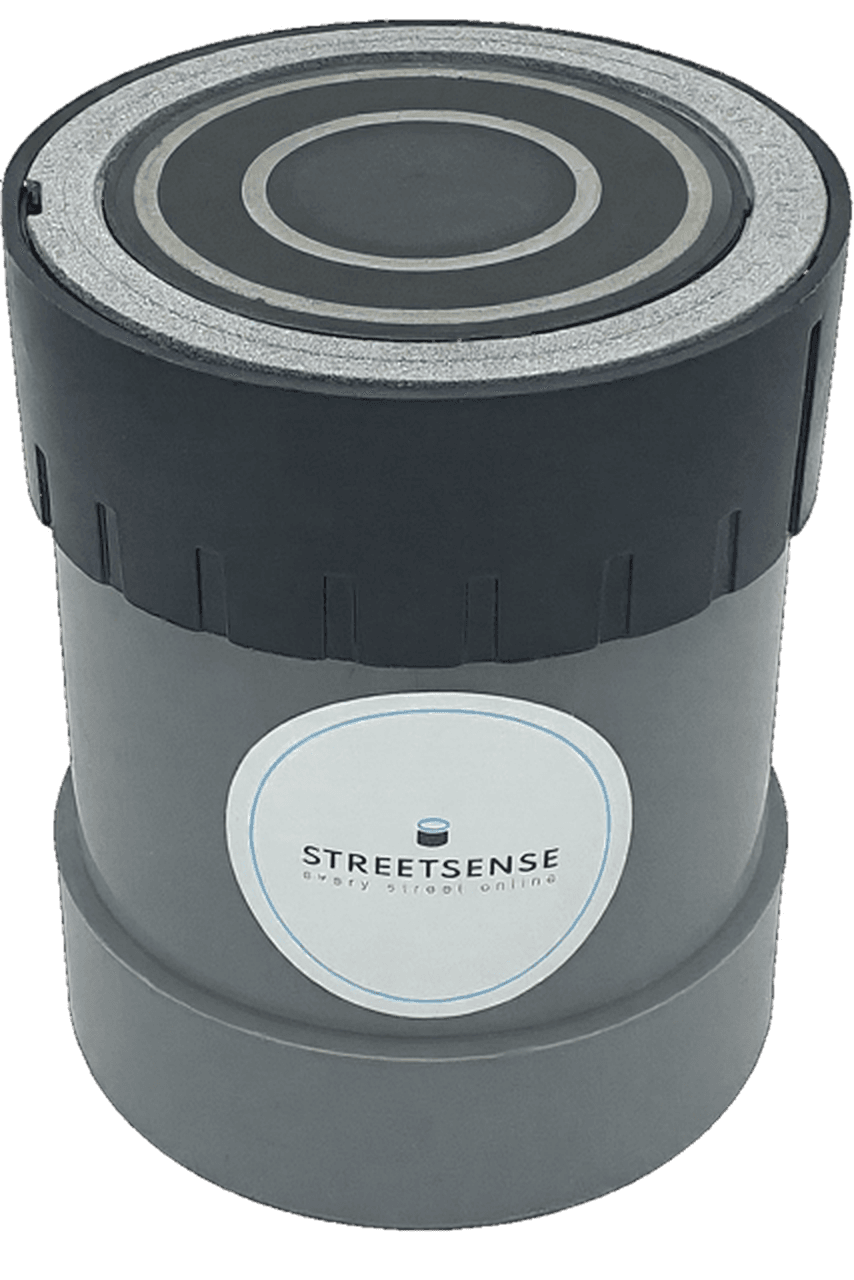

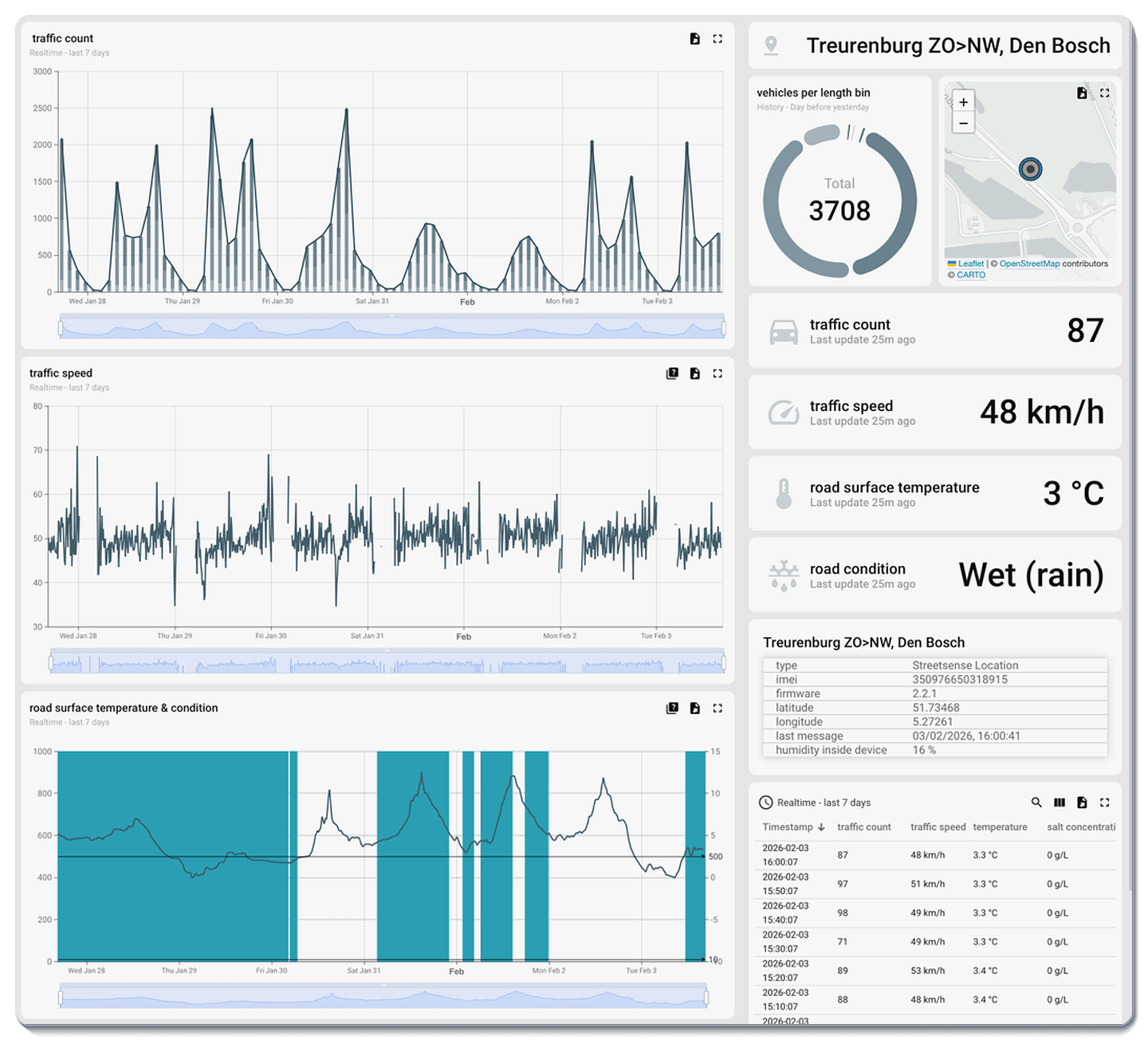
The device, installed in the road’s surface, captures a wealth of data and relays it to a server at frequent intervals. Sensing capabilities include:
- Traffic Flow: Counts and classifies vehicles into length classes, such as distinguishing cars from trucks.
- Speed: Provides approximate traffic speeds per interval.
- Road Conditions: Measures surface temperature and electrical conductivity to detect if the road is dry, wet, frozen, or gritted.
Powered by Actinius: Engineering for Extremes
The core of the sensing solution lies in the hardware design. The device must survive being run over by heavy-duty trucks while running on a single battery for up to five years.
Leveraging Actinius' experience with Nordic Semiconductor technology and hardware design, the StreetSense hardware was engineered to be:
- Ultra-Low-Power: Optimized for years of autonomous operation without external power or solar panels.
- Multi-sensing: Integrating magnetometers, accelerometers, temperature sensors and specialized conductivity rings into a singular, ruggedized form factor.
- Seamlessly Connected: Utilizing specialized IoT communication protocols to ensure data reaches the dashboard even from within the road surface.
The Impact: Fact-Based Urban Planning
The data provided by StreetSense is already proving a 99% correlation with traditional sensing equipment at a fraction of the cost. This accuracy allows cities to:
- Validate Traffic Models: Instead of guessing traffic patterns, planners can see exactly when and where cars are diverting into residential areas.
- Smart Gritting: By monitoring road temperature and salt concentration (conductivity), municipalities can optimize gritting routes, saving money and reducing environmental impact.
- Future-Proofing Infrastructure: High-resolution data on vehicle classes helps predict road wear and tear, moving from reactive repairs to predictive maintenance.
Conclusion
By combining Mobility Sensing’s domain expertise in traffic management with Actinius’ specialized hardware and software engineering, the "white spots" on our traffic maps are disappearing. StreetSense demonstrates that when you remove the barriers of power and high-cost installation, you can finally take every street online.
Actinius is a reliable partner. In-depth knowledge and flexible, a pleasure to work with.
– Tom van de Ven, Mobility Sensing
Learn more: Mobility Sensing StreetSense